
Showing posts with label Tech. Show all posts
Showing posts with label Tech. Show all posts
Monday, March 11, 2013
The World’s Smallest Cell Phone Looks Like A Toy


When it comes down to it, we all love to marvel at the world’s smallest blanks, but they’re generally not that practical. That’s why we doubt we’ll ever find ourselves snapping pics with the world’s smallest camera, keeping fish in the world’s smallest aquarium, or shooting targets with the world’s smallest revolver. But the world’s smallest cell phone might make sense… assuming you don’t need to play Angry Birds, browse the internet, or do anything other than make phone calls. Actually, okay this is probably just as useless as those other things. Still, Japanese company Wilcom thinks the tiny new Strap 2 phone will be a big hit… presumably among people who like working gadgets that look like doll toys from the early 2000’s. Available in white, black and pink, the phone features a one-inch display and an antenna. It will be available in Japan for $380.


Sunday, March 3, 2013
moodInq Shows How Programmable Tattoos That Change with Your Mood Would Work

Thursday, August 11, 2011

Tuesday, August 2, 2011
China Shows Off Its Ambitious High-Speed Train
This photo taken on June 27, 2011 shows a high-speed train preparing to leave the railway station in Beijing for a trial run to Shanghai. A top railway official tried on June 27 to ease safety concerns over the key high-speed rail link between Beijing and Shanghai, just three days ahead of the line's much-anticipated official launch

 This photo taken on June 27, 2011 shows a guest resting on a high-speed train heading to Shanghai during a trial run from Beijing
 This photo taken on June 27, 2011 shows a train driver operating a high-speed train heading to Shanghai during a trial run from Beijing
 This photo taken on June 27, 2011 shows attendants standing at attention before serving guests on a high-speed train heading to Shanghai during a trial run from Beijing
 This photo taken on June 27, 2011 shows invited journalists resting on a high-speed train heading to Shanghai during a trial run from Beijing


Read more...
Saturday, July 30, 2011
New iPhone 5 rumors

(CNN) -- Another week, another round of iPhone 5 rumors. This time, it's an apparent case for the unreleased phone that has Apple fans buzzing.
Mobile Fun, a British mobile-phone blog, has posted images of what it says is the design for a next-generation iPhone case leaked "from a Chinese case manufacturer."
The case, and an image the blog says was later sent to them by another manufacturer, suggest what they call "massive changes" to the iPhone 5, or whatever it will be called.
Among them: what appears to be a larger, roughly 4-inch display screen, a curved rear panel more like earlier iPhones than the iPhone 4, and a hole on the back -- about where the Apple logo is on current phones. Some Apple observers speculate that hole indicates a possible new location for the device's antenna, replacing the iPhone 4's much maligned side antenna.
"If these images are authentic -- and we have every reason to believe that they are -- then the iPhone 5 is a radical evolution of the iPhone concept, and a bigger departure from the iPhone 4 than previous case images have shown," the blog post reads.
But MacRumors, a popular blog focused on, well, what its name says, isn't convinced.
"We suspect all of the images and information are coming from a common source, but we don't necessarily believe it to be true ...," wrote Arnold Kim of MacRumors. "[W]e received a reliable tip that this is not what the iPhone 5 will look like. As well, several other credible news outlets have said that the iPhone 5 will look largely similar to the current iPhone 4."
Based on multiple reports, all of them from unnamed sources due to Apple's loose-lips-sink-ships policy on details about upcoming products, the next version of the iPhone will be announced in September.
The China Times pinpoints the iPhone 5 release to the second week of September with an initial order of 4 million units, MacRumors said.
A better camera, a faster processor, a bigger screen -- all have been mentioned repeatedly in rumors that inevitably swirl every time a new Apple product is in the works.
And there's obviously an audience for every one of these speculative tidbits.
A recent survey of about 3,000 consumers showed that 35 percent of them plan to buy Apple's next phone when it hits the market -- despite not knowing anything about it yet.
Tuesday, July 19, 2011
Triple Display Flip Phone With Android
Designer Kristian Ulrich Larsen introduced a Flip phone with triple display.Flashy Flip phone will collapse in your pocket and have three flexible AMOLED touchscreens with power of Android……
 Flip phone is differentiates it self from the norm of a smartphone and incorporates the physical product into the interaction with what’s on the screen.Flip phone is from designer Kristian Ulrich Larsen and it’s a triple-display handset running stock Android that pops out like a tent, collapses into a standard (if curved) slate and even folds out like a little book. Each screen is said to be Super AMOLED hiding behind Gorilla Glass with steel mesh acting as hinges and there’s a full QWERTY keyboard.


Read more...
Tuesday, July 12, 2011
Google+ experiences some growing pains

The chatter is generally positive, with tech bloggers cheering Google's new social network as a cleaner and more robust alternative to Facebook. But there have been some bumps on the road.
Over the weekend, Google admitted to inadvertently "spamming" some Google+ users with notification e-mails -- the messages the company sends out if another user adds you to their "circles" of contacts on the site or comments on one of your posts.
Instead of sending those notes out only once, as intended, Google+ sent them "over and over again," writes Google's Vic Gundotra in a post on his Google+ page.
"Thank you for helping us during this field trial, and once again, we are very sorry for the spam," the Google vice president wrote Saturday.
Most Google+ users seemed quick to forgive the slip-up.
"No worries Vic. Keep up the good work! Looking forward to more improvements!" one user wrote in a reply to the apology.
"It's alright, man! :D You rocks!" said another.
Gundotra chalked the spam up to growing pains.
"For about 80 minutes we ran out of disk space on the service that keeps track of notifications. Hence our system continued to try sending notifications. Over, and over again. Yikes," he wrote. "We didn't expect to hit these high thresholds so quickly, but we should have."
It's unclear exactly how many people have joined Google+, and the service undoubtedly has far, far fewer users than Facebook, which leads the field with 750 million users. The fact that the Google+ community is still relatively small is no surprise for two reasons: First, the site is so new; and second, it still isn't public, meaning you have to get a personal invitation in order to sign up -- at least for now.
But it's clear that the new, non-Facebook social network has attracted enough attention that it's growing rather quickly, setting it apart from Google's other attempts to start a social network. Google+ already has more than 4.5 million users, according to one analyst, Paul Allen, who used census data about surnames to make his calculation.
One problem with this rapid growth, as the Google spam shows, is technical. It's hard to make a new network work perfectly if it's expanding too quickly. Google has used this logic repeatedly to justify its limited-invite approach, instead of letting anyone on the Internet join the network.
Another issue, however, is social. At first, a limited network like Google+ feels intimate -- just as Facebook did before nonuniversity users could join it. But with growth comes change, and that could leave some Google+ users feeling that their cozy private party has been transformed into the county fair.
Finally, Google+ users have been pointing out features of other social networks that either don't exist on Google+ or aren't easy to use.
One is the idea of "institution pages," which, on Facebook and Twitter, let companies put out info about new products, news stories and such. There's no such feature to date on Google's new social network, although Google has said that it's working on adding this.
Another is celebrity verification.
On Twitter, for example, if you go to Lady Gaga or Justin Bieber's profile page, there's a little "verified account" badge next to the name, which is a signal to visitors that it's actually the account of a celebrity.
On Google+, it's unclear if accounts are real or fake.
Facebook CEO Mark Zuckerberg's Google+ page stirred up news on the blogosphere because it's interesting that the leader of a competing social network would join this new service, and because it was unclear if his page was real. Blogger Robert Scoble cleared this up in a text message conversation with Zuckerberg, who said that this was indeed his Google+ account.
Similar authenticity issues have popped up with the Google+ pages of Kanye West, Nancy Pelosi and Michael Dell, among others.
The social media blog ReadWriteWeb weighed in on this limitation:
"While it's understandable that a verification system was not at the forefront of Google's mind when preparing to launch the network, it looks like one is desperately needed now. We want to be able to tell the real stars from the fakes, so we're not wasting our time. Or even better -- maybe there should be a way for the fakes to never exist in the first place."
For its part, Google continues to say additional updates are coming.
And, in comments to those pleas for patience, users generally seem to believe that the benefits of the service will be worth the wait.
Phone hacking can extend beyond voice mail
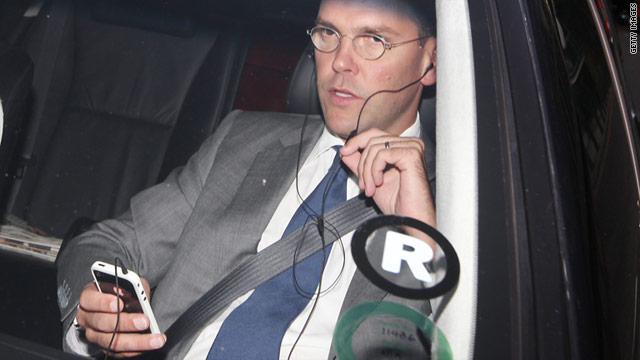
While the phone hacking by British tabloid News of the World was unexceptional by technical standards, security experts say the scandal portends how the growth of smartphones will lead to more sophisticated breaches.
The tactics that tabloid reporters used to eavesdrop on high-profile British targets -- and eventually led News Corp. to announce Thursday it is killing the 167-year-old publication -- were remarkably low tech.
Former News of the World staffers say that reporters employed tricks to access voice-mail inboxes and procure a great deal of information from British celebrities and the royal family. Experts say that to obtain the PIN codes needed to access those accounts, the reporters used an illegal method known as pretexting.
This tactic involves calling, say, a customer-service representative for a cell-phone operator and impersonating someone to get details about that person's account. In many places, such as the United Kingdom and the United States, such practices are now prohibited.
Pretexting used to be a vital tool for freelance investigators, said Frank Ahearn, a former detective who does consulting on how to avoid detection, in an interview with CNN last year. "I could still do it, but I just don't, because it's illegal now," he said.
News of the World appears to have exploited a mechanism in mobile-phone carriers' systems that allows people to access voice-mail messages remotely, from any phone, experts say.
The episodes followed an even more primitive breach in the 1990s when the Sun, another British tabloid, published recordings of royal family members' phone conversations. Among the revelations: James Gilbey, a close friend of Princess Diana's, frequently referred to her affectionately as "Squidgy."
Those unsecured mobile communications, in the days of analog transmissions, were easily tapped by amateur ham-radio operators as well.
Security on smartphones
Squidgygate aside, the migration to more advanced cell phones in recent years has facilitated more sophisticated intrusions. Smartphones have become the dominant type of mobile device bought in the U.S., according to Nielsen, and are growing rapidly worldwide.
With these pocket computers, intruders have myriad more entry points available to them.
Two of the most common, security analysts say, involve tricking a phone user into installing poison applications or opening malicious links in their Web browsers. Attacks using the latter method are becoming ever more sophisticated because software makers provide few safeguards against them.
With the proliferation of curated app stores, scammers are finding it difficult to sneak their virus-laden software onto people's phones undetected. Apple and many others, not including Google's Android, vet apps before making them available online.
Software providers also maintain a "kill switch" that allows them to delete problem programs remotely from customers' phones after they've taken root. And some carriers, such as AT&T, have required that customers only install Android apps from trusted storefronts.
Security researchers have long warned that cell phones are poised to be the next frontier for cyber attack.
"It's always been a concern," said John Walls, a spokesman for industry group CTIA Wireless. "That's why, No. 1, the carriers do invest a vast amount of resources to provide security within their own networks."
For example, operators have increased the security measures in place to block junk text messages before they reach a recipient's handset, Walls said.
Cell phones are "built with at least some form of protection engineered from the beginning, which was not the case with PCs," said Horace Dediu, who runs a Helsinki, Finland, mobile consulting firm called Asymco.
But those protections have, in some cases, bred a false sense of security, Dediu said.
"People feel safer with these things," he said. "You can see that psychologic attacks (convincing someone to install a malicious app, for example) are always going to be possible."
Pretexting is ultimately about social engineering, Walls said. And telecoms increasingly train customer-service workers to follow strict guidelines to keep information from falling into the wrong hands, he said.
Convincing phone users to click a strange link or install an app that steals their data is also a form of social manipulation. And a relatively easy one at that, researchers say.
How to protect yourself
But the mobile security apocalypse that has long been forecasted hasn't come.
So far, mobile attacks have most often attempted to trick people into sending expensive text messages or making pricey phone calls to 900 numbers, because those ruses are the simplest and most lucrative, experts say.
When it comes to stealing personal information, cyberthieves prefer to grab reams of private data from corporate servers, such as the recent attacks on Sony, experts say.
Some security firms are working on software to protect smartphones. AnchorFree, for example, is building a program that remotely shields Apple customers from problems.
Eugene Lapidous, AnchorFree's chief architect, said in a recent interview that "iPhone doesn't protect itself. So we have to provide some intermediary service in the cloud."
If you regularly download apps or media files, or access shared Wi-Fi networks via your phone, CNN mobile columnist Amy Gahran says it's a good idea to purchase a mobile security package.
Many mobile security packages are available for $20-$30 upfront, plus about the same amount per year. TopTenReviews.com recently published a comparison chart of 10 leading mobile security services for consumers.
But security software for phones so far has mostly been an underserved and largely undesired market.
While many more safeguards are in place for phones, the checklist for protecting oneself sounds similar to the handouts many corporate information-technology departments give to employees: Don't lend your equipment out; don't install suspicious programs; use common sense.
"We urge people, just like you would on a computer: Be wary of addresses or communications with which you're not familiar," Walls said. "It sounds simple."
It is. But as unscrupulous reporters have shown, some phones can be fairly easy to crack.
Subscribe to:
Posts (Atom)


